Thursday, February 11, 2016

Azarat, City of Ghosts

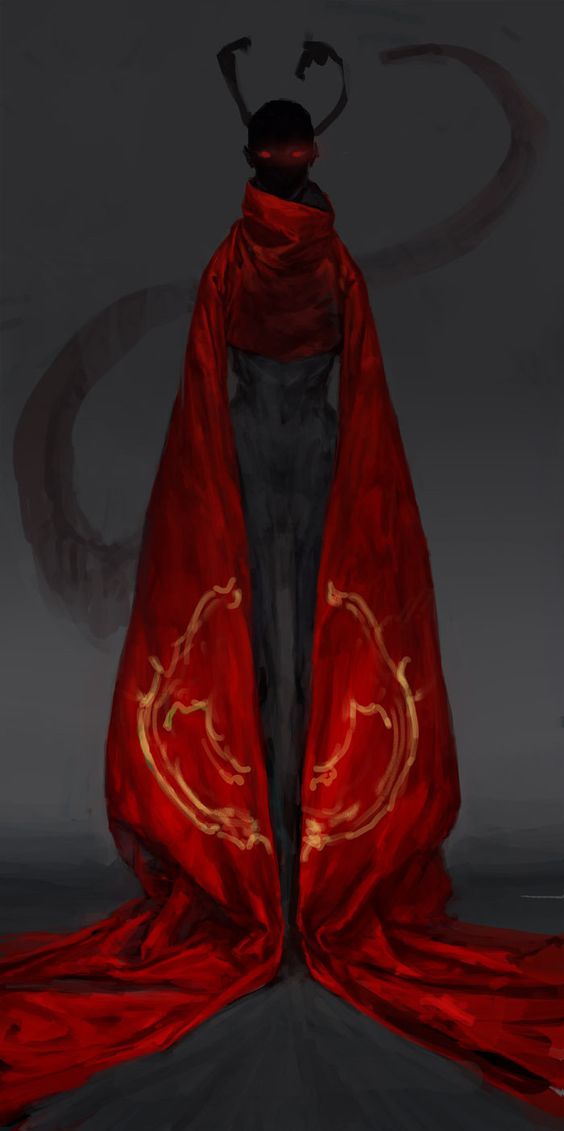
Sorry, no moon today. Here's a displaced asteroid city orbiting an artificial binary star instead.

Drawing by me. If you use it or like it or hate it or whatever, sweet. Leave a comment.

From an overheard conversation in the Gilded Rooster, a popular tavern in Upper Flinwell: "Okay, so it's not really a city of ghosts. Oh, the city's haunted all right, and there are more undead than a lot of living folks find comforting, but Azarat's moniker is a throwback to a distant past. See, it used to be a sacred city where pilgrims ventured to offer prayers for the departed. There was a big temple to Oggo, God of the Restless Dead. For real, that was his name. The temple? It was breathtaking. It took centuries to build. I mean, I never saw it, but you can't live here as long as I have without knowing about the temple, man."

"Then came the dawning of the twin suns and the whole city broke apart, but everyone knows that story. Most of Azarat drifted off into the void, but a few districts stuck around, held in orbit around the Parasite and the Sustainer. People get from rock to rock by walking through those big stone archways you see scattered everywhere - each rock has portals to every other rock. Well, 'cept for Greldenwod Observatory. Nobody really knows how to get there."

SKRELB. The dwarven quarter. Always leaking smoke and anvil noises, but experimental brewery is big there, too. The Alchemists' Guild pays extra whenever it's caught dumping illegal potion runoff in Skrelb, but they'd rather incur fines than stop doing it.

EDULA. Lots of lonely old trees and lots of hungry ghouls in Edula. It used to be a library. There used to be monks and scholars and priests and heirophants, all sorts of people who cared about the mind and the soul.

THE OPEN MARKET. All the districts meet here to buy and sell. The Grym Wardens make certain all transactions happen with a minimum of bloodshed. Visitors are reminded to be respectful of the crabmen as Market Lake is their home.

UPPER FLINWELL. The creative heart of the city. Lots of bohemian types, artists and crooks and slumlords. The Grym Wardens hate it. Lord Turvim is always losing money here on gentrification projects. It's a great place to buy the hard stuff they make in Skrelb but aren't supposed to sell.

LOWER FLINWELL. The wealthy part of town. Aristos, private security, magical wards, fancy parties and opulence. The Grym Wardens all but ignore this place, but it's still very heavily guarded: Clockwork soldiers are commonplace because they can't tell secrets.

YORPA. The ho hum humdrum middle class district. You need a fitted ball joint or a new wagon axle? Yorpa. Also the secret location of the Thieves' Guild (er, 'Merchant's Meet'), because everyone expects it to be in Upper Flinwell but you don't get good at thieving by doing what the authorities expect, now do you?

SKELF. "Skelf is officially vampire free. Dissidents caught spreading rumors of vampirism in Skelf will be reported to the Grym Wardens and face penalties appropriate for sowing public discord. Please be an ambassador for the city and not a worthless gossip."

TURVIM. Lord Turvim DXVI rules Azarat from the Jade Palace. He's a madman who wears colorful masks and throws amazing parties. The real rulers are all sycophants and courtiers. It's very Game of Thrones, only replace King Robert with Salvador Dali.


HALLS OF GWONT. Gwont was an elven warlord who set up huge monuments to himself during some antediluvian period of Azarat's history. The Halls of Gwont are a set of public buildings: a coliseum, a library, bureaucratic offices, theaters, etc. Oh, and lots of intense elvish statuary. Really, it's the #1 tourist stop when you're in the City of Ghosts.

GRELDENWOD OBSERVATORY. Everyone's got a theory about this spot. Supposedly, it's all about national security. A tightly regulated bastion of scientific and arcane research. Get your permits in order before you even think about setting foot out there, and be prepared to sign a lot of in case of death or serious injury waivers.

TREELEY. As the name suggests, this whole place is an orchard. The thriaes run it like their own little kingdom. I don't like that they control so much of our food source, but they've never threatened to starve us out. And it's nice having a bunch of friendly sexy bee ladies buzzing about. What? Don't give me that look.

GRYMNOTH PRISON. You go to Grymnoth, you don't return. That's if you're lucky. Worst case scenario, you do return, only you're a Grym Warden, your mind wiped clean and your body warped by weird alchemy. Nothing left of your own. You'd think I'd feel safe knowing those brutes are out there protecting us, but it's just the opposite.

TOWERS OF JUSTICE. This used to be a prison, but one of the previous Lord Turvims decided to make it into the religious heart of Azarat. So temples. Lots and lots of temples. All sorts of religions have shrines and rites and services out here, and the graffiti and vandalism is constant. That said, if you've ever dreamed of starting a cult, well, rent is cheap.

THE PARASITE SUN & THE SUSTAINER. These tiny stars burst fully formed from the heart of the asteroid where Azarat once sprawled. No one knows how or why, not definitively, though there are seven major theories and sixty minor theories that Lord Turvim currently approves. Yes, the dawning was a tragedy, and so much of the city has been forever lost. On the bright side, however, the Sustainer's light means most of our old worldly concerns (food, water, breathable air) have been significantly lessened. Sunshine provides the lion's share. Really, it's quite a miracle.

Postscript: Suggested options for player character race in Azarat: Human, Elf, Dwarf, Ghoul, Crabman, and Thriae (the Greek theme kinda works, but honestly I prefer Deserette for my bee-maidens).

Wednesday, February 10, 2016

Uralar, Bog Moon of Mysteries

So continuing with the ideas expressed in yesterday's post, I rolled up another moon. This was a 'living world' with a single antagonist: hags. With a little help from donjon.bin.sh, I got:

Uralar is a loathsome world of thorny forests and yellow skies. It is ruled by hags.

Ok, good start. A single antagonist isn't enough, though, for a forest planet. And I don't know about you, but I'm excited at the prospect of dark fey matriarchs lording over amphibian beast men. So let's add boggards. And now that we've got boggards, let's add dinosaurs, because I would love to see barbarian frogs riding stegosauruses chasing my friends' characters through a planet-sized swamp.

Honestly, this is just how my brain works.

The hierarchy goes Hag Countess > Hag > Boggard Chief > Boggard > Dinosaur, with dinosaurs being utterly unaware of their proper place and mostly just dumb and hungry. So, big dinosaurs occasionally eat Hag Countesses, and the cycle continues.

Now, Uralar can get all kinds of weird if you want it to: Hags breeding with boggards or capturing monsters to cultivate dire progeny for some prophecy or another, or maybe the hags are a celibate ruling caste that despises all other living creatures. I think Uralar's a great place to introduce some adult themes, but strictly speaking, you don't need them. Uralar could very easily become an land of fairy tale witches, swamp dinosaurs, and bumbling, comical toad-men. Personally, I want it to be an unsettling place full of unsolvable mysteries, so that's where I took it.

BOGGARD TRIBES OF URALAR

Art by Jaime Jones

Melting Arm Tribe
Boggards of this tribe ritualistically pour acid onto their forearms, then sew animal bones into the flesh while the wound heals. This process often leaves their limbs looking withered and sickly. They are ruled by a cruel tyrant called Broghbok who is quick to use his touch of corruption to keep weaker boggards in line. Broghbok and his greatest warriors ride crested tyrants into battle.

Thunderfoot Tribe
Boggards of this tribe paint themselves in red mud and ride trained thunderfoot tyrants into battle. Gulogo, their priest-king, keeps a coterie of animal trainers well-fed and well-armed, knowing that the tyrants are essential to holding power in the region.  They also breed whiptails for food.

This small, secretive tribe of boggards is prone to mutation. Many are born with extra limbs or eyes, and boggard magic users are far more common. Although the tribe is small, it is fierce: the magic users who rule it demand constant sacrifices for their dark rituals, and over time, the Poison Garden tribe has mastered the art of raiding. (As linked above, the mutation table for The Cult of Blood and Briar from The Swordfish Islands is amazing and I want an excuse to roll on it, hence these dudes).

Worm Tribe
These insane boggards worship the great destroyers as gods.  They paint their flesh blue or white or yellow, or a mixture of all three, and conduct unspeakable orgies in the hopes of attracting bholes to their presence. These religious orgies are the central focus of their lives; everything else they do is done in service to these perverse observances.

Art by Jacek Irzykowski

THE HAGS THEMSELVES

Hags are fiercely individualistic. No two hags look alike (at least, not if they can help it). I love the stats for Green Hags, how they're this great amalgamation of fighter/illusionist/rogue that works well with all sorts of allies, and would assume such creatures make up the majority of Uralar's hag population. Of course, being fierce individualists, no two hags have the exact same stat-block. Below are three such hags, their quirks, and my proposed stat-blocks.


Steel Euphenia is a sadist and a killer. She loves nothing more than to watch the light go out in a living creature's eyes. Most nights, she wanders along the banks of the River of Shadows hunting dinosaurs for sport. Occasionally, she grows bored of murder and retires to an elaborate ruin where mutilated boggards tend to her whims, but Euphenia never keeps to a schedule. She is extremely old - legends say she neither eats nor drinks nor sleeps, and hasn't for centuries. Her fighting prowess is coveted by all, and countless hags and boggard chieftains have attempted to sway her to fight for them. Some have even succeeded.

To build Steel Euphenia in Pathfinder, I'd start by replacing pyrotechnics and whispering wind with rage and vampiric touch, removing skill ranks in Disguise and adding them to Athletics, and giving her a sweet +3 vicious flail. And she totally has max hit points and a couple levels in Fighter.


Cleo the Breathstealer is a powerful sorceress. She makes her home atop an ancient tree whose branches are so wide that an apatosaurus could stand on them without causing them to bend. She sustains herself on moonlight and stolen breath. She wear beautiful silks woven long ago and far away by otherworldly visitors. She is a mystery, and cultivates ambiguity and misunderstanding whenever possible. The Worm Tribe venerates her. They believe she knows all the secrets of the great destroyers and offer her carcasses, slaves, and precious stones in the hopes of coaxing her to share. The boggards say that when she dreams, long dead giants stir below the muck...

Stats wise, Cleo could easily be represented by a fey mothman. If that doesn't feel right, instead add a few levels of Oracle to a Green Hag, or just slip phantasmal killer into an advanced green hag's spell list.


Niora of the Brass Rings is a charismatic ruler who extorts offerings from seven different boggard tribes, most notably the Thunderfoots. She can change her form to that of a raven or crow, transmuting back again in a moment's notice, and she seems to have a powerful affinity for flying creatures. Niora claims she is a pacifist. However, the golems she controls have no qualms about violence and mete out terror on her behalf. Some of her golems can transform into birds - none of the other hags know how she accomplished this feat, or where she found golems capable of such transformation - and Niora isn't telling.

For Niora's stats, replace tree shape with beast shape I. She is served by 2d6 golems, which are scarecrows with giant cloaks and no pumpkin heads. Replace Fascinating Gaze with At will--beast shape I, crows or ravens only. Also, taking inspiration from the art, I imagine these scarecrows fight with beautiful, enchanted greatswords, and that Niora controls them with one or more magical rings she wears beneath her gloves. Convincing her to part with a brass ring of golem command could be one hell of a quest.

***

So that's Uralar. Honestly, when it comes to rolling up more hags, I think a random name generator and some killer art is the way to go. Build the hags you'll need for the story you want to tell. 

Same with the boggard tribes. Sacred color + domesticated dinosaur + weird ritual = new tribe.

Uralar asks more questions than it answers. Why are there dinosaurs? Why are human-appearing fey creatures lording over amphibians? Were there other civilizations here? If so, what happened to them? You can answer those questions however you like, but when it comes to this particular moon, I'd play it like a hydra: For every mystery answered, two take its place.

Note: Artist unknown where unlisted. I'd love to know who did the sculpture for Steel Euphenia. Also, Uralar has no meaning as far as I'm aware. It sounds both Scottish and Sumerian to me, so I dig it.

Monday, February 8, 2016

Metum, the Devil Moon

I was reading Monsters and Manuals last night and I stumbled on this clever idea. The author even made a cool d20 chart to go along with it, and so I thought, “Sweet, I’ll give it a go.” I rolled:

Rocky world populated by minor devils.

And was like, “Well, that’s boring.” I rolled up a few more and jotted them down, wondering if I’d ever use this for anything. I rolled up an organic planet where dwarfs and mind-flayers fight over lumps of brain and an ice world ruled by aboleth, both of which I thought were very cool. Surely I could use those.

Then, this morning, I suddenly remembered that terse little prompt about the rocky world ruled by minor devils, and my shower-thoughts kept flowing until I’d written all of this:

METUM

Metum’s surface is utterly devoid of life. It makes the Gobi desert looks like the Amazon. It’s mostly iron-rich rock under a swirl of carbon dioxide, so red-orange, like Mars, but somehow far less hospitable.


In a forgotten age, 666 barbazus (bearded devils) were left stranded here. They were given no orders, no instructions, and no chain of command. The supremely lawful creatures tried to elect leaders from within, but their inability to break from Hell’s rigid caste system made it impossible to rally. They fought among themselves, murdering one another for the slightest insult, only to discover that the murdered devils returned, fully intact, six days later.

The devils have been stuck on Metum for thousands of years. They build almost nothing: they are killers, not builders. The devils might band together long enough to erect a tower or dig a trench, but complex architecture eludes them. They cannot change their caste. No one is promoted or demoted. Everyone is male. Everyone is lawful evil. The devils have no need for water, food, or shelter; bearded devils are immortal beings and besides, they cannot ever truly die. Also, everyone has killed everyone else. No one trusts anyone. All they have to offer is violence and betrayal.


Metum is a remote moon, rarely visited on purpose. When someone or something does come to Metum, the devils tend to torture it for sport until everything is gone. Most of the devils have gone mad with long isolation (being devils, they weren’t terribly stable to begin with), so bargaining will be hard. That said, these devils are desperate. Anyone who offers them something besides eternal drudgery in this dark Valhalla will be remembered for centuries, whether their words are true or false. They would all kill for an opportunity to return to Hell. The devils know that when they die, they return to Metum. This fact might inspire recklessness or extreme caution, depending on the devil and how wild they’ve gone across the uncounted millennia. Some devils believe that if they can make it back to Hell, they’ll no longer be tied to Metum. They can serve in their caste again. They can torture souls. There will be other devils besides barbazu: they can grovel to their superiors and punish their lessers forever.

A magistrix desperate enough to enlist the devils of Metum will have a powerful army at her command, provided she can catch their attention, transport them off-world, and deliver on her promises. After all, a planet of unkillable devils with nothing better to do than nurse grudges could make for a frightening adversary, provided they could ever reach you.

Ok yeah, so these are Ice Warriors from Dr. Who. The imagery still works.

Metum is a graveyard for fools who thought they could bargain with the barbazu. Derelict ships, ruined one-way portals, and other paraphernalia for traversing the void might still be found scattered across its surface, though it’s equally likely the devils have ruined it. Given enough time, any single devil might have escaped centuries ago in a stolen spacecraft, returning to Metum after a suffering an untimely death, the technology he used to escape forever lost.

***

So, from a literary standpoint, Metum isn't a new idea. It's basically Gazorpazorp without a female component: the worst aspects of masculinity exaggerated. That said, I love the concept, and now I want to roll up another moon populated only by succubi. I also want to find some time write up a full sword-and-planet setting in which to tell my friends to roll death saves.


Note: The name Metum came up in a Sumerian name generator, and it’s also the Latin accusative singular of fear (argumentum ad metum is a fallacy in which a person attempts to increase fear toward a competitor), so I like it for this planet. Fear crouched in the remnants of vanished civilizations.

Friday, February 5, 2016

Gildore's Shop of Wonders

donjon.bin.sh is a wonderful resource.

Before running each of the modules in my current campaign, I urge the players to go shopping. Not every item has apparent value, and not every drawback is disclosed. For example, the Hand of Glory is a steal here, but they don’t realize just how many magic rings are going to turn up in the next two adventures. Likewise, the Ring of Protection is a good deal, but the vinegar smell actually led to the monk’s untimely death, as a giant constrictor snake was able to smell him while he was scouting and attack him alone.

Enjoy at your own risk.

Art by Tony DiTerlizzi

Gildore is a Tengu merchant who often works with the Freehold Adventurers’ Guild. He travels the length and breadth of the land searching for rare and unique treasures. The following is a sample of his current stock.

+1 Breastplate – 1215 gp (10% discount) 
A distinctive suit of polished steel armor with a stylized lion’s head embossed upon the chest. Yes, its previous owner died while wearing it; he died looking incredible.

Arcane Scroll (Caster Level 5): Color Spray
– 75 gp (25% discount)
This scroll is simply Color Spray written four times on expensive vellum. The author was apparently worried he would be caught without Color Spray when he needed it most. Don’t let his paranoid nightmares become your reality! Buy now!

Divine Scroll (Caster Level 10)Break Enchantment
– 955 gp (15% discount)
This ancient piece of parchment is would have crumbled to dust long ago if not for the runes of power inscribed upon it.

Hand of Glory – 3000 gp (25% discount)
This mummified hand once belonged to the necromancer Voorga, leader of the Council of the Blasphemous Sign, who was slain by heroes during the reign of the Devil Lich. Probably anyway.

Potion of Gaseous Form – 675 gp (10% discount)
This luminous potion is contained in a wax-sealed glass jar. For some reason, it may also turn your hair white when you drink it. For some other reason, the change is permanent. Gildore doesn’t know why. Stop asking him dumb questions.

Potion of Cure Moderate Wounds – 270 gp (10% discount)
This suspicious viscous scarlet potion smells salty. Best not to ask.

Ring of Protection +1 – 1800 gp (10% discount)
A finely crafted electrum ring set with amethysts. It protects its wearer from bodily harm and, strangely, causes its wearer to smell faintly of vinegar. Magic is weird sometimes. Just go with it.

Wand of Acid Arrow (9 of 50 charges) – 810 gp
This heavy elm wand looks like it means business. It’s covered in bloodstains, runes, and ichor. Gildore assures you it still works if you know how to use it.

Thursday, February 4, 2016

oD&D (1974 Dungeons & Dragons) v. Pathfinder


Six weeks ago I joined an ongoing oD&D campaign. We’re three sessions in, and I’m having a blast. In some ways, it’s very different from the D&D I’m familiar with (which is largely 3rd Edition derivatives, with liberal portions of AD&D and 4th Edition and a dash of 5th for zest). I thought I’d put together this table to illustrate how it’s different from my current squeeze, Pathfinder.


oD&D
Pathfinder
Character Creation
Super simple. Done in 10 minutes. What distinguishes one Magic-User from another is his/her personality, loot, and motivations.

The negative is that there aren't many crunchy options. You get one spell as a level one Magic-User, determined randomly, and you probably only have 2 hit points. Good luck.

Complex, but the process is very rewarding. I love building characters that can do interesting tricks with the game mechanics.

On the downside, my friend's latest character (Sorcerer 10) can cast 31 different spells. While that could be seen as a plus, he's never played a Sorcerer before, and printing off a spellbook for handy reference is kind of a pain when it's that thick and detailed.
DM Prep
I haven’t prepped an oD&D game myself, but there’s a big difference between this stat block:

Werewolf: Move 120, AC 5, HD 5 [hp 20] 2 attacks [1d6/claws]. Only hurt by silver or magic weapons.


That said, having a highly detailed and descriptive system isn’t bad, but it does dramatically increase DM prep time.
Lethality and challenge
Crazy lethal. No negative hit points—you hit zero hp, you die. Cure Light Wounds only heals 1d6 and doesn’t show up until level 2. Pray you never fail a saving throw.

That said, it is amazingly satisfying to roleplay your way out of a combat encounter you have no chance of winning with force, and it happens pretty often in this system.
In my experience, Paizo published material isn’t terribly dangerous. It's designed for Society play (ie. pick-up groups full of characters that aren’t likely to have good synergy), so to be fair, it can't just be hard-mode all the way through.

Homebrew campaigns can ratchet up the lethality by tailoring fights to fit the party, though, in my humble opinion, the Challenge Rating system is utterly unreliable.

Accessibility
Rules are tersely written and require deep reading, not skimming. Upside: They’re short. The layout of the old books is just awful, though, but if you simply can’t tolerate the bad layout, good news: Swords and Wizardry did a great job of  (essentially) re-packaging it for visually oriented people like myself. If I ever DM an oD&D game, I'll likely use S&W.

Pathfinder can overwhelm new players with choices. Hell, it can overwhelm seasoned veterans with choices. Modules are also very densely written. Honestly, It’s probably better to come to Pathfinder after you’ve already played a couple different systems.

What do I do with all this gold?
Since you get XP for acquiring gold, everyone’s a treasure hunter. Of course, spending your gold is tricky, since there are no magic item shops per se. Instead, you can get lost in the minutiae of building castles and strongholds, or figuring out how many mercenaries to hire this month for your conquests. I personally enjoy this kind of thing, but I can easily see where other people would find it dull. A good DM needs to know the in-game options available to his players and be able to deal with greedy players (like myself) who want to set up trade caravans, rob topaz quarries, and offer competitive banking options to the oligarchy.
So you’re level 5 and have 11,000 gold? Here’s a long list of magic items with price tags attached.

Some people hate the idea of commoditized magic, but I’m not one of them. I think it’s a reason to have your character loot those golden idols and trigger the boulder trap, because there’s a Phylactery of Negative Energy Channeling waiting for you back in town if you can only scrounge up 2,000 more gold pieces!

It does, however, mean you’re likely to have shopkeepers that are 15th level wizards with iron golem bodyguards, just to keep greedy 2nd-level rogues from looting the +3 longsword of haste he’s got on the 20% off rack. (Or you could just let them steal it and make it a plot arc, which has worked well for me in the past).

Or you just have players who will happily wander through your game world without questioning any of your conventions, but unless you all agree to play blissful naives who are too fragile for this world, that’s never going to happen. (Amazingly, my current group elected to play Lawful wunderkinds, so I'm actually living the dream.)

The Endgame
The endgame is running a kingdom, your thralls worshipping at your feet, reciting litanies of your legendary deeds. You can still die to a spider bite, but you have a dozen heirs and retainers ready to take your place. You’re a mortal with a fascinating legacy.
You’re a superhero. You summon angels, fly all the time, travel across dimensions in the blink of an eye, and assassinate the gods themselves. Even if you could be killed, you’d just come back as a clone, buy some new gear, and retrieve all your old gear once you’re through meting out vengeance.

Sandbox v. Railroad
(Definitions)
Sandbox: (copied from Alex Schroeder) Dangers are not adapted to the strength of the party. Generally speaking, it’s safer near civilized settlements. The further you move into the wilderness, the more dangerous it is. That’s how players control the risks they want to take....The actions of your characters determine the direction the campaign will take. There is no planned ending for the campaign. As long as you keep investigating rumors, exploring locations and following quests, [the DM] will keep developing the game world in that direction. The harder you look, the more there is to see.

Railroad: In this context, I'm using railroad to mean, "A game with a structured, linear plot in which the characters are expected to take on the role of protagonist or antagonist." There's probably a better word for this idea than 'railroad' but I can't think of what it is.

This game is designed to be a sandbox. Monsters get harder the further away from town you travel, so if you morons want to kill the Dragon of Doom at level one, you should have just told me you didn’t want to play and we could’ve all gone to a movie. 

Conversely, if you don’t want to go to the Forsaken Temple of Linear Progress that I’ve spent hours prepping, well, there’s no way in hell I’m getting you through those (obviously trapped) front doors.
Pathfinder is great for running challenging yet balanced encounters in a linear fashion. Some of the modules/adventure paths make BIG ASSUMPTIONS about player motivations (Hell’s Rebels, I’m looking at you. You had so much potential! Grr!) and that can be frustrating both as a player and a DM. If you’re running a homebrew campaign, most of those issues disappear, but then those ugly, multi-page stat blocks show up and make on-the-fly DMing feel like a chore.

So, I guess, Pathfinder is better suited for linear gaming, but that doesn’t mean it’s a bad, choiceless railroad devoid of player agency. It’s just much, much harder to run a sandbox game in Pathfinder than it honestly should be.


So there you go. It’s a biased, far-from-comprehensive list, but it gets the point across.

As an aside, I must admit I had some misconceptions about playing oD&D. I played a game (Castle Zagyg) at GenCon last year and loved it, mostly because of the quirky people at the table and the excellent DM. I learned that lots of people still played oD&D and that the old stuff was getting harder to find, which I found really intriguing.

Then someone told me about the Old School Renaissance. 1974 D&D was still alive and well and hey, you should check it out, there are a lot of indie gamers making new and cool stuff. I didn’t go too deep, though, mostly because my next foray to OSR was through Lamentations of the Flame Princess, and Lamentations doesn’t skimp on the horror, gore, and sex (which is fine, it’s a game for adults, but reading spell effects in the core rulebook that talk about gang rape or genital mutilation was like, “Nope, pass.”) Lamentations also uses THAC0 and AD&D conventions that I find obtuse, but again, like it says in the header, I don’t hate on systems. If you’re playing LoFP and loving it, shine on you crazy diamond.

(Despite the assertions I’ve made in the preceding paragraph, Scenic Dunnsmouth and A Red and Pleasant Land are both LofP products and incredibly fascinating reads. I doubt I’d ever use them exactly-as-written, but they’re inspiring material for any game that makes use of weird horror.)

That said, my current oD&D game is set in the marvelous Yoon-Suin, which the author describes as "Fantasy Tibet by somebody who has never been to Tibet and knows nothing about it, but likes the idea of yak-folk and self-mummifying monks." It's a trip. You should check it out.


Wednesday, February 3, 2016

Pathfinder S1: Clash of the Kingslayers (spoilers)

I ran Clash of the Kingslayers last weekend for my current PF group - Paladin 9, Hunter 10, Sorcerer 10, NPC Cleric 12, and they absolutely destroyed it. They had fun. I had fun. Fun fun fun. It took ~8 hours, probably more than we needed but we were drinking hard cider and got distracted by movie trailers for like an hour.

So if you're reading this, I'm going to assume you're (A) interested in running stand alone modules for mid-level Pathfinder groups and (B) looking for good modules to run.

(If that's not you, check out my post on Maggot Lamias if you're into D&D 5th Edition and you don't mind some artistic nudity, or maybe this other thing about killing your friends in RPGs.)

With D&D 3.0/3.5/early Pathfinder modules, monsters tend to be far too frail. Power creep is real. My advice is not to fight it by nerfing players, but to simply double all the hit points for your monsters. The Hunter can throw down 100 points of damage on a turn, easily, and the Paladin averages 30 per hit, occasionally reaching 100+ on Critical Smite Evils. If I want to challenge them, I need to keep my monsters around for more than a single turn.

For this mod specifically, I rounded the Doomguides up from 44 to 50 hp, and made the hydra/dragon lake monster a Colossal monster with triple hit points. It made sense to me to keep the fodder monsters weak and make the boss monsters beefier. This made the Manyfaced One a scary fight, but I'm glad I did it.

These evil dwarf valkyries are metal as fuck. (Artist Unknown)

POSITIVE
Abadox. At some point, the dungeon itself animates and becomes a monster, with the players trapped inside. How cool is that?

Tough Fights. The Manyfaced One deals 1d4 ability damage to a character's LOWEST stat! He also deals ability damage when he "reveals his true form," 1d4 to each of STR/DEX/WIS unless you make a saving throw. Brutal. A follow-up fight with a pair of Spectres had my players justifiably panicked.

Intriguing. The political intrigue in the first section of the adventure is actually a lot of fun to roleplay. It's a little useless as-is: It'd be nice to have some noblemen listed in the dwarf king's hold, but I suppose Pathfinder Society is more about "Ok, read them this text block, have them select YES or NO, then read the following text block depending on what they said." Ok, that sounds like a complaint (and it is, but about PFS, not this mod specifically), but I enjoyed the introduction and my players enjoyed bantering with nobledwarves.

You commit regicide. How fun is that? As a DM, you need to be prepped to deal with whatever happens next for Glimmerhold once the king is dead, but that's good material for future games.

NEGATIVE
It's verbose. You'll need to make a couple crib sheets in order to get through this module without constantly re-reading stuff or looking up monster abilities.

Interesting yet pointless backstory. Yes, the betrayal of the dwarf king fuels the main conflict, but the players go to the monastery because "The King commands it!" The Mistbreather Clan, the Rovagug giants, a hundred years of history and intrigue, it's all just so peripheral. My players never figured out the "mystery" behind the curse, and didn't care to figure it out once the monsters were dead and the treasures looted.

Bad layout. Pretty standard with Paizo stuff, honestly, but this mod is particularly egregious. There's an encounter with a ghostly dwarf monk that includes a two-page stat block (seriously?), but the stats for Manticores are just given as a page number. Boo.

Overall? I recommend it. Just be prepared to do some real work and make it fit your group.

Thursday, January 14, 2016

Psychadelic Fantasy Hexcrawl Brainstorm

I read this post and had to try it. I did a quick skim at a random starting spot, ran out of covers, and started adding in stuff from other random fantasy art I had saved on my desktop. I also ran some random name generators, etc. Far from complete and not really my own ideas but a fun brainstorm anyway.

"A Song of Blood." John Buscema.


The disembodied head of a long-vanquished demon lord refuses to die. In the wilderness, a tribe of misguided humans feed slaves into its ravenous maw. They are supported by a misguided prince who believes he has befriended the demon.

A forgotten race of headless bat-men (they have totemic faces in their chests) rule over a nightmarish cavern network, domesticating enormous, blind serpentine worms and harvesting psychedelic fungi.

A tribe of gray skinned goblins has begun kidnapping human women. They drag them off to strange, mauve ruins and perform despicable midnight rituals.

Zarazig Mountain. Fighting men from a dozen different clans have gathered here to fight for the bemusement of a white-clad sorcerer with a skeleton’s face.

Prismatic golems capture travelers for their wizard master. They are kept in an elaborate slave pit until the wizard chooses them for his unspeakable rites.

An enormous orange aberration dwells in the roots of an ancient tree, feeding on those who trespass through its forest valley.

Green-scaled lizardmen dwell here in great numbers, warring against pathetic humans and those who trespass into the ruined primeval city they call home.

A garden of living trees (with disturbingly human mouths and eyes like sunsets) watch over an incredible hoard of lost treasure. The wealth of hundreds of would-be plunderers is strewn amidst their roots.

An otherwise peaceful city has a gargoyle problem (sudden appearances, kidnapped women, horrified onlookers). It is worst when the moon is full.
  
A stormy lake plagued by fierce crocodiles.

A sorceress (revealing red attire, a-la Vampirella, wearing a golden skull mask) rules from a crystal tower. She delights in tormenting souls and commands a vast and varied collection of incorporeal undead.

The women of a remote village have been cursed with lycanthropy. They do not permit those who know their secret to live.

A tribe of spear-fighters has learned to tame and ride crocodiles. Their small empire is expanding rapidly. Their elites have become tauric man-crocodiles and dwell in a sunken city beneath a lake.

Fat, legless gargoyles (their lower half is that of a serpent) hunt trespassers in their mountain home.

Icecrown Mountains. The land is covered in a thick coat of windblown snow and ice.

Were-lions dwell here, brutally oppressed by a sorceress in an ivory skull mask. Her legions are her experiments, poor bestial things that cannot disobey her yet hate her with every fiber of their being. The secret of the sorceress’ power is a demonic stone face in the heart of her tower.

A were-lion stalks the ruins, claiming women for his harem and men for his sustenance.

Green-scaled lizardmen wage war against their red-scaled subterranean counterparts.

A lost city protected by a dwindling order of knights who ride giant hawks into battle. These knights worship hawk-headed gods and prey upon the man-crabs of the lower cliffs.

A lonely bog. It is the last known location of the fabled Eye of Set, a jewel worth more than kingdoms. The swamp’s most famous inhabitant is a dark-haired woman who wears the skin of green leopards; most believe she is a sorceress.

Bat-infested caves which house the remains of a forgotten race of giants. Some giants have become undead guardians.

Atop a bare mountain, green-scaled lizardfolk pay homage to their petty goddess: a great serpent with a gorgon’s head.

Man-crabs dwell in a sunken city, placated by pirate gold.

Buandu Plains. A sentient stone golem is worshipped by local tribesmen. Its prowess in battle has made them wealthy and warlike, yet dependent on the creature. Its high priests wear cloaks of yellow silk and helmets of beaten gold.

A squat, deformed sorceress has mastered pyromancy. She teaches her secrets to those who show her homage. She is protected by a tribe of were-bears.

A coven of green-scaled lizardfolk meet in a benighted valley. They make deals with ape-wizards, trading gorgeous violet stones for pyromancy.

In this ancient labyrinth, ape-wizards have successfully bred two-headed purple tyrannosaurs.

Orange skinned goblins in pink loincloths dwell in a green stone ruin. They serve the whims of the ape-wizards.
Near the lake’s shore, a small city built within the calcified remains of a gargantuan angler fish.

An ancient monastery guarded by one-eyed yellow serpents. Its steps ascend to the clouds. Its guardians never sleep.

Gargantuan, pale green dragonflies with exaggerated, sharp-toothed humanoid mouths live amidst a cold pine forest. A single tower of white stone with no visible entrance dominates the landscape, rising a thousand feet into the sky. The local barbarians believe that riding a dragonfly is the greatest show of bravery.

The undead remnant of a powerful barbarian chief rules over a red, steaming lake. He demands sacrifices of children and stands twice as tall as a normal man. He wears a tattered black cloak, a horned helm, and wields a great-sword with a human skull counterweight. In battle, he rides a black stallion with bat wings and glowing red eyes.

Gray goblin cannibals live in squalor on the shore of an underground lake.

Kinbaram Fields. Mottled green dinosaurs rule this sandy waste.

Deep below the earth, a many-tentacled yellow thing with a woman’s face speaks prophesy from a clay-stained red lake.

A white primordial serpent, two hundred feet long, rules over the broken ruin of an ancient castle.

Several desiccated corpses are chained to a monolithic stone engraved with alien symbols. The surrounding desert offers few clues.

Dreaming Forest. The trees are full of dancing lights and mysterious laughter.

A three-headed spider demon (the heads are human with five eyes apiece and horrible distended tongues) rules this forest, worshipped by savage human cannibals.

The smoking ruins of a small town. The air is filled with smoke.

Bloodfen Mire. A ring-shaped stone monolith floats serenely in the sky. Below, the trees look strangely like men. Approaching the monolith is difficult: Not only because it is hovering, but also because of the predatory trees that stalk the fen.

Fighting pits of the orange-scaled lizardmen. Dinosaurs, subterranean beasts, and captured nomads fight for the amusement of aristocratic snake-faced gorgons.

A tribe of elephant-riding nomads is expanding its territory.

Empress of Silk. A green-silk-clad human sorceress with power over spiders rules this ancient city, as she has for a thousand years. Order is kept by spider-riding knights. Fates are decided in the gladiator pits.